
We're mainly in laminating aluminum foil with various plastic films.

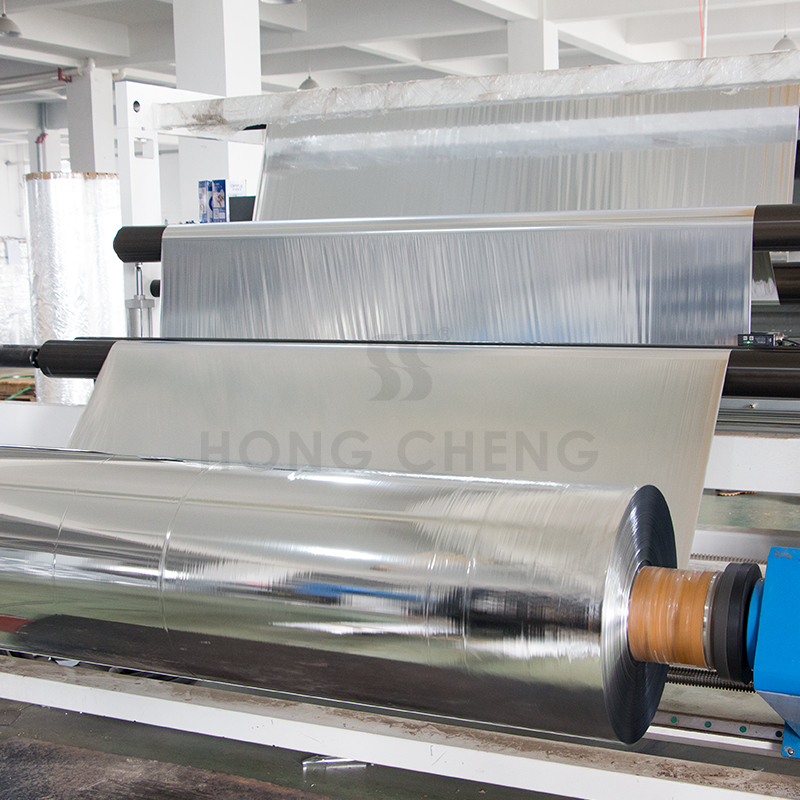
Aluminum foil packaging material has become an indispensable part of the packaging industry, widely used in food, medicine, cosmetics, electronics, and other fields. Its ability to achieve moisture-proof, oxygen-barrier, and sealing effects is the core reason for its popularity, as these three functions are crucial to extending the shelf life of products, maintaining product quality, and preventing contamination. Whether it is the aluminum foil composite film inside potato chip packaging, the aluminum foil blister packaging for medicines, or the aluminum foil bags for electronic components, they all rely on scientific material design, advanced processing technology, and reasonable structural matching to realize these three key effects. This article details how aluminum foil packaging materials achieve moisture-proof, oxygen-barrier, and sealing effects, combines industry practices, material characteristics, and technical principles, provides professional insights for industry practitioners and users, and meets SEO optimization needs while complying with relevant norms.
To understand how aluminum foil packaging materials achieve these three effects, it is first necessary to clarify the basic characteristics of aluminum foil itself. Aluminum foil used for packaging is usually made of high-purity aluminum (aluminum content not less than 99.5%) through multiple rolling processes, forming an extremely thin sheet with a smooth surface and dense structure. This dense structure is the foundation for its moisture-proof and oxygen-barrier performance, while its good ductility and heat conductivity lay the foundation for achieving effective sealing. Unlike other packaging materials such as plastic films and paper, aluminum foil has no pores or gaps at the microscopic level, which can fundamentally block the penetration of moisture and oxygen. However, a single layer of aluminum foil is often not sufficient to meet the comprehensive packaging needs of various products, so it is usually combined with other materials to form a composite structure, further enhancing its moisture-proof, oxygen-barrier, and sealing capabilities.
The moisture-proof effect of aluminum foil packaging materials is mainly achieved through the dense structure of aluminum foil and the auxiliary protection of composite materials, which together block the penetration of water vapor. Water vapor in the air is one of the main factors leading to product deterioration — it can cause food to become moldy, medicines to deliquesce, and electronic components to short-circuit. Aluminum foil itself has excellent moisture-proof performance because its dense metal structure does not allow water vapor molecules to pass through. Laboratory tests show that the water vapor transmission rate of high-quality packaging aluminum foil is extremely low, and when combined with other waterproof materials, this performance can be further optimized. For example, a high-barrier Aluminum Foil Composite film developed with space technology inspiration has a water vapor transmission rate of only 0.2 grams per square meter per day, which is equivalent to only a thumb-sized amount of water molecules passing through a football field-sized film every day.
In practical applications, aluminum foil is often compounded with waterproof materials such as polyethylene (PE), polypropylene (PP), or polyester (PET) to form a multi-layer composite structure, which enhances the moisture-proof effect. The plastic layer in the composite structure can not only enhance the mechanical strength of the packaging material but also form a secondary barrier against water vapor. For example, the aluminum foil + PE composite film is widely used in food packaging; the PE layer has good water resistance and can prevent water vapor from directly contacting the aluminum foil, while the aluminum foil layer blocks the remaining water vapor penetration. Some high-end packaging materials also add a special waterproof layer to the aluminum foil surface, such as butyl rubber modified asphalt, which further improves the moisture-proof performance, especially suitable for products that are sensitive to humidity, such as medicines and electronic components. In addition, the surface treatment of aluminum foil, such as chemical conversion film treatment, can form a dense oxide film on the surface, which not only enhances corrosion resistance but also further improves moisture-proof performance by blocking the contact between water vapor and the aluminum foil substrate.
The oxygen-barrier effect of aluminum foil packaging materials relies on the excellent gas barrier properties of aluminum foil and the optimized design of the composite structure, which prevent oxygen from penetrating into the packaging and causing product oxidation. Oxygen is another key factor affecting product quality — it can cause food oxidation and spoilage, medicines to lose efficacy, and metal components to rust. Aluminum foil has extremely strong oxygen-barrier performance because its dense metal structure can completely block the penetration of oxygen molecules, which is very different from plastic films that have certain gas permeability. Pure aluminum foil has almost zero oxygen transmission rate, which is the main reason why it is widely used in packaging products that require long-term preservation.
There are two main types of aluminum foil used in packaging: pure aluminum (AL) foil and vacuum aluminized (VMPET) foil, both of which have good oxygen-barrier properties but with slight differences. Pure aluminum foil has better oxygen-barrier performance due to its dense structure, while vacuum aluminized foil is formed by depositing aluminum vapor on a base film under high vacuum conditions (aluminum layer thickness 350-400A), which also has good gas barrier properties and is suitable for lightweight, non-steaming packaging such as seaweed and puffed food. To further enhance the oxygen-barrier effect, aluminum foil is often compounded with high-barrier materials such as nylon (PA) or ethylene-vinyl alcohol copolymer (EVOH). These materials have excellent oxygen-barrier properties, and when combined with aluminum foil, they form a multi-layer barrier system, which can effectively block oxygen penetration even in harsh environments. For example, the aluminum foil + PA + PE composite structure used in high-end food packaging can reduce the oxygen transmission rate to almost zero, effectively extending the shelf life of food.
It is worth noting that the oxygen-barrier performance of aluminum foil packaging materials is also affected by factors such as thickness and surface state. Appropriately increasing the thickness of the aluminum foil can enhance its oxygen-barrier performance, but when the thickness exceeds a certain range, the improvement effect becomes weak. A smooth and clean surface without pinholes or scratches is also crucial — pinholes or scratches will form gaps in the aluminum foil layer, allowing oxygen to penetrate, thereby reducing the oxygen-barrier effect. Therefore, strict quality control is required during the production of aluminum foil, including precise rolling and surface inspection, to ensure that the aluminum foil has no obvious defects.
The sealing effect of aluminum foil packaging materials is achieved through the combination of material characteristics, processing technology, and sealing equipment, which ensures that the packaging is tightly closed and prevents the entry of moisture, oxygen, and other contaminants. Sealing is the key link to ensure the effectiveness of moisture-proof and oxygen-barrier functions — even if the material has excellent moisture-proof and oxygen-barrier performance, poor sealing will make these functions ineffective. The sealing effect of aluminum foil packaging mainly relies on the thermal conductivity and ductility of aluminum foil, as well as the use of appropriate sealing technologies and equipment.
Electromagnetic induction sealing technology is one of the most commonly used sealing methods for aluminum foil packaging, widely used in medicine, food, cosmetics, and other industries. This technology uses the principle of electromagnetic induction: when the packaging container passes through the induction coil of the sealing machine, the high-frequency current generates a magnetic field, and the magnetic lines of force pass through the aluminum foil, generating a large number of small eddy currents in the aluminum foil, which makes the aluminum foil heat up rapidly. The heat melts the hot-melt adhesive compounded on the aluminum foil, so that the aluminum foil is tightly bonded to the mouth of the container (such as plastic or glass bottles), forming a tight seal. This sealing method has the advantages of fast speed, good sealing quality, and suitability for mass production, and can effectively prevent the entry of moisture and oxygen.
Thermal sealing technology is another commonly used sealing method, mainly applicable to aluminum foil composite films with a heat-sealable layer (such as PE or PP). During the sealing process, the sealing machine heats the aluminum foil composite film, melts the heat-sealable layer, and then applies a certain pressure to bond the two layers of films together, forming a tight seal. The temperature, pressure, and time of thermal sealing need to be strictly controlled — too high temperature will damage the aluminum foil and the composite layer, too low temperature will lead to insufficient melting of the heat-sealable layer and poor sealing, and improper pressure or time will also affect the sealing effect. For example, in the packaging of aluminum foil bags, thermal sealing is used to seal the edges of the bag, ensuring that the bag is tightly closed and no gaps are left.
In addition to sealing technology, the structural design of the packaging also affects the sealing effect. For example, some medicinal aluminum foil packaging bags are designed with a positioning strip and positioning groove structure, which can be re-sealed after opening, avoiding product moisture and contamination caused by poor sealing after opening. The overlapping width of the aluminum foil during the packaging process also needs to be controlled appropriately (usually 5-10mm), and the joints should be sealed with weather-resistant sealant if necessary to ensure that there are no gaps. For irregularly shaped products, the aluminum foil should be cut and shaped according to the product shape to ensure close fitting, avoiding gaps caused by improper fitting and affecting the sealing effect.
The moisture-proof, oxygen-barrier, and sealing effects of aluminum foil packaging materials are not independent of each other but complement each other to form a complete protective system. The moisture-proof and oxygen-barrier effects rely on the material structure and composite design, while the sealing effect ensures that these two effects can be effectively exerted. For example, if the packaging has good moisture-proof and oxygen-barrier performance but poor sealing, moisture and oxygen will still enter the packaging through the gaps, leading to product deterioration; on the other hand, if the sealing is good but the material itself has poor moisture-proof and oxygen-barrier performance, the sealing effect will be meaningless.
Industry standards also have clear requirements for the moisture-proof, oxygen-barrier, and sealing performance of aluminum foil packaging materials, guiding manufacturers to optimize product design and production. In China, relevant national standards specify the water vapor transmission rate, oxygen transmission rate, and sealing strength of aluminum foil packaging materials for different products. For example, the water vapor transmission rate of aluminum foil composite films for food packaging should not exceed a certain limit, and the oxygen transmission rate should be controlled within a reasonable range. The European Union and other regions also have strict standards for the barrier and sealing performance of aluminum foil packaging materials, ensuring that products meet safety and quality requirements during transportation and storage.
With the continuous development of the packaging industry and the increasing demand for product quality, the technology of aluminum foil packaging materials is also constantly upgrading. New materials and processes are constantly emerging to further improve moisture-proof, oxygen-barrier, and sealing performance. For example, the application of nanocomposite coatings can enhance the barrier performance of aluminum foil; the development of prefabricated aluminum foil composite packaging integrates moisture-proof, oxygen-barrier, and sealing functions, improving packaging efficiency and quality. In addition, inspired by space technology, researchers have developed a high-barrier aluminum foil film that was originally used to protect space station cables from atomic oxygen erosion, and its improved version has excellent moisture-proof and oxygen-barrier performance, which can significantly extend the shelf life of food and medicines.
Industry data shows that the global demand for aluminum foil packaging materials is growing steadily, driven by the development of the food, medicine, and electronics industries. China’s aluminum foil output reached 5.4 million tons in 2024, of which a considerable proportion is used in the packaging field. Among them, cigarette packaging, food packaging, and medicinal packaging are the main application scenarios of aluminum foil, accounting for more than 70% of the total consumption of aluminum foil in the packaging industry. With the continuous improvement of product quality requirements, the demand for high-performance aluminum foil packaging materials with excellent moisture-proof, oxygen-barrier, and sealing performance is increasing, which promotes the technological upgrading of the aluminum foil packaging industry.
In practical use, users also need to pay attention to the correct use of aluminum foil packaging materials to ensure that their moisture-proof, oxygen-barrier, and sealing effects are fully exerted. For example, avoid damaging the aluminum foil layer during transportation and storage, as scratches or pinholes will reduce its barrier performance; for sealed packaging, avoid opening it unnecessarily, and re-seal it in time after opening to prevent the entry of moisture and oxygen; store aluminum foil packaging products in a dry, cool, and ventilated environment to avoid the impact of high humidity and high temperature on the packaging performance.
In conclusion, aluminum foil packaging materials achieve moisture-proof, oxygen-barrier, and sealing effects through the combination of material characteristics, composite structure design, and advanced sealing technology. The dense structure of high-purity aluminum foil provides the foundation for moisture-proof and oxygen-barrier performance; the composite structure with waterproof and high-barrier materials further enhances these two effects; electromagnetic induction sealing, thermal sealing, and other technologies ensure tight sealing, preventing the entry of moisture and oxygen. These three effects complement each other, forming a complete protective system that effectively extends the shelf life of products, maintains product quality, and ensures product safety.
Whether in food, medicine, cosmetics, or electronics, the moisture-proof, oxygen-barrier, and sealing effects of aluminum foil packaging materials are crucial to the quality and safety of products. With the continuous advancement of technology, aluminum foil packaging materials will continue to optimize their performance, providing more reliable packaging solutions for various industries and promoting the healthy development of the packaging industry.


Hangzhou Hongcheng Technology Co., Ltd. sitemap
Diese Website verwendet Cookies, um sicherzustellen, dass Sie das beste Erlebnis auf unserer Website erhalten.






Kommentar
(0)